The Arcade

Staff Ride

Learn history while you play.

A turn-based war game where every battle is a real one. Take command at Cannae, Agincourt or Stalingrad, on the ground as it was, and find out for yourself why it went the way it did.

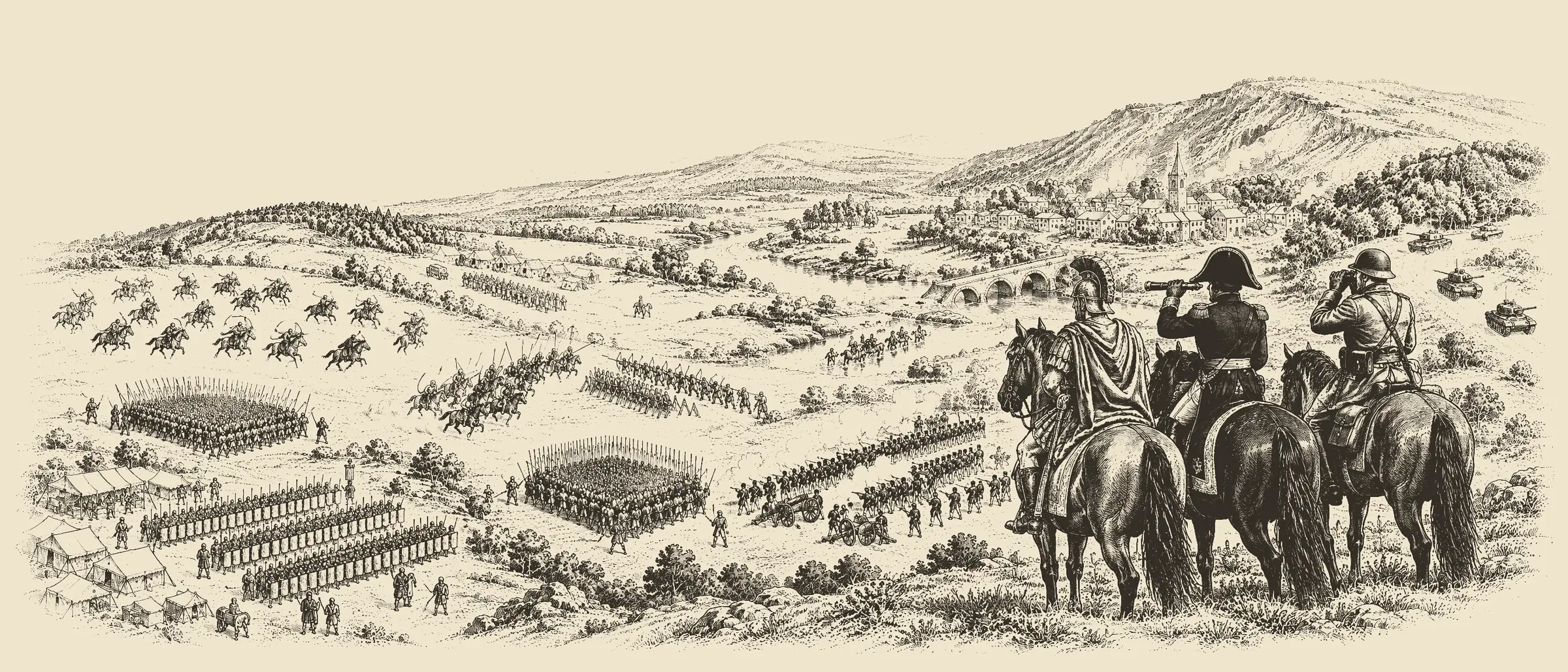
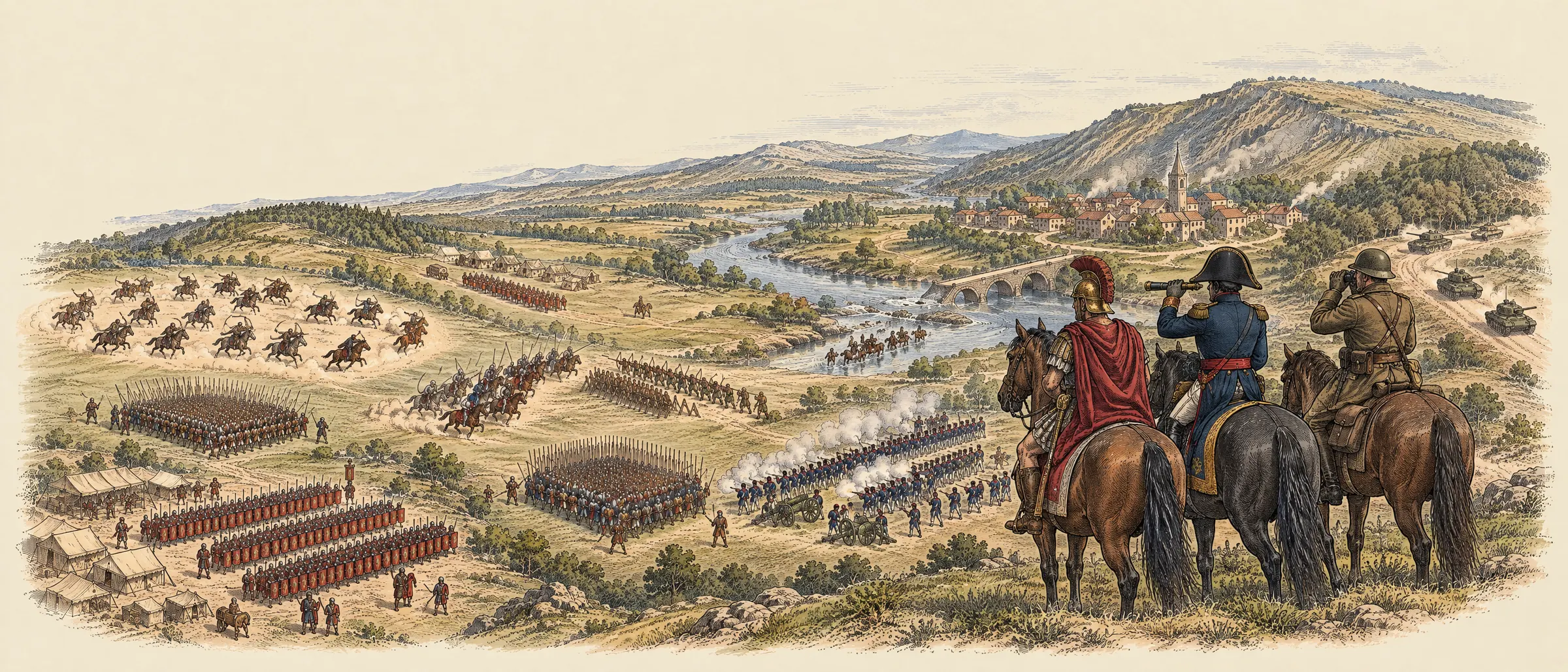
Three mounted officers of three ages, a Roman general, a Napoleonic officer with a spyglass and a twentieth-century officer with binoculars, look down from a ridge on a river valley where Roman cohorts, pike squares, horse archers, a smoking gun line and a column of tanks are all deployed at once
The idea

History you play through, not read.

A staff ride is how soldiers study a battle: they walk the ground where it was fought and ask what they would have done. This is that, as a game. The fields, the armies and the commanders are real, and each army’s strengths and weaknesses come with the history that explains them.

Lose at Agincourt as the French and you will not forget why they did.

33Historical armies
32Real battlefields
7Commanders’ campaigns
22Centuries, Rome to now
The battles

Every plate is a question.

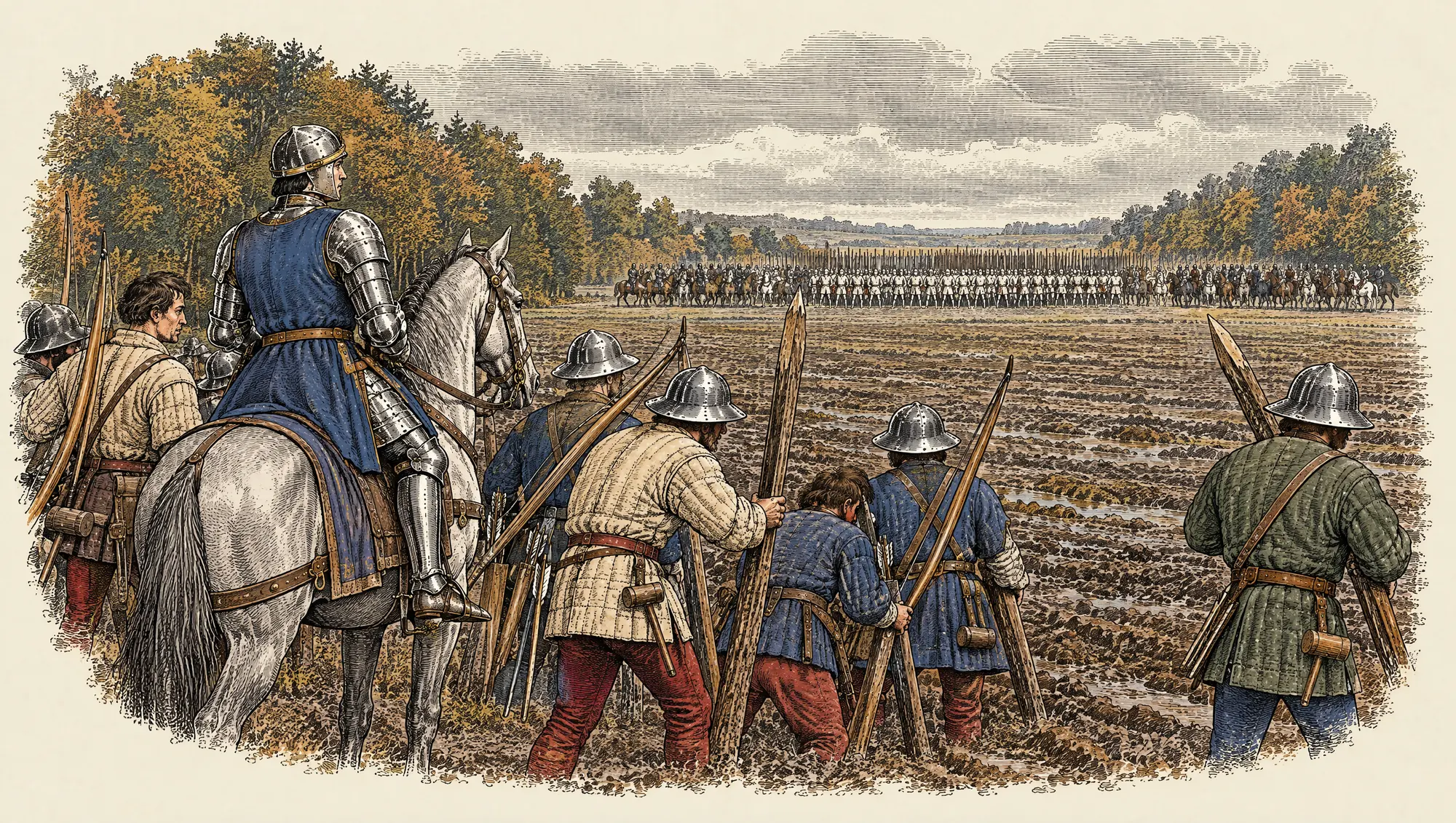
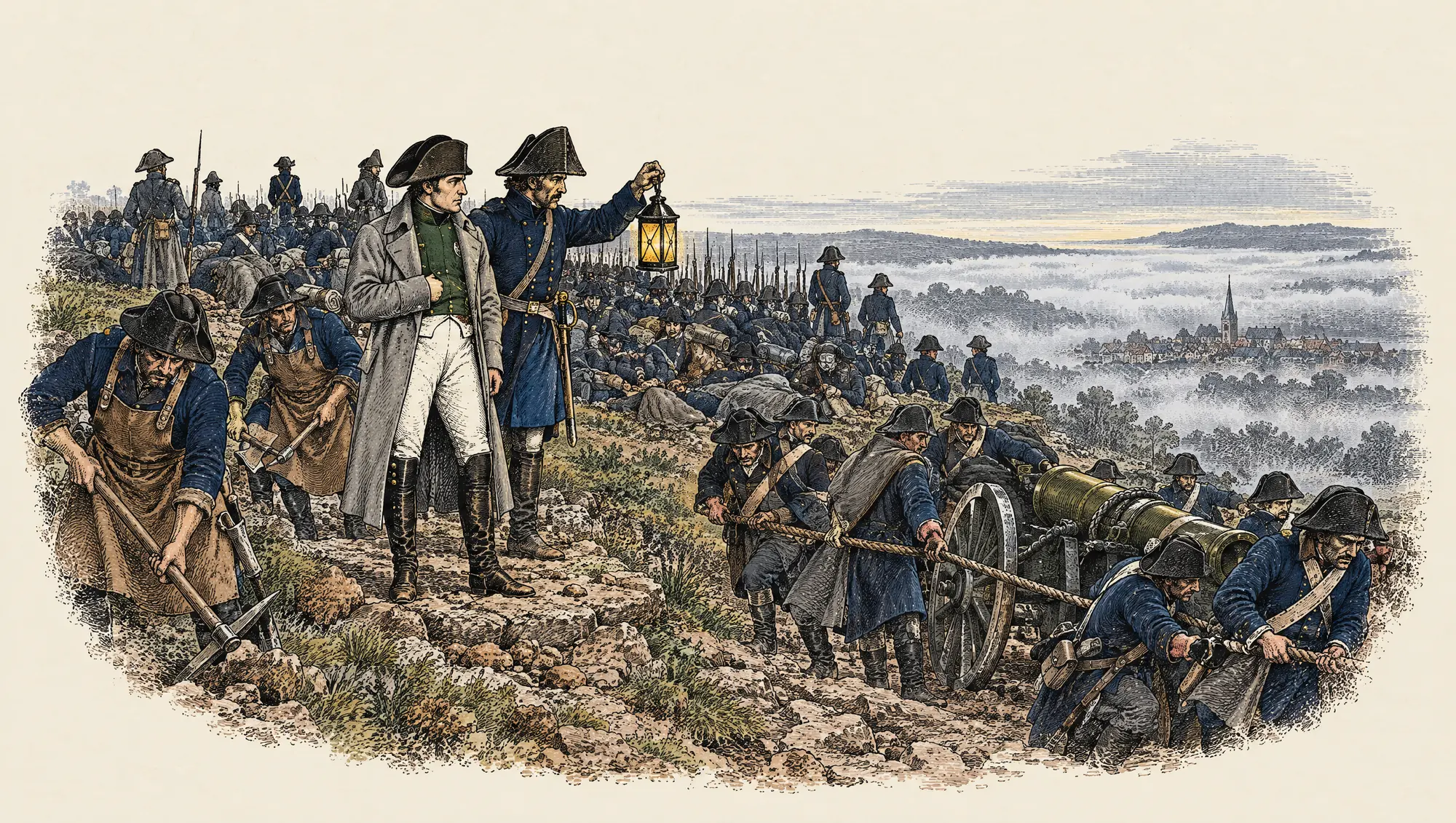
The game is drawn like a nineteenth-century military atlas: paper, ink and engraved line. Each battle opens on a plate like these, and each one is a question the battle answers.

English archers driving stakes into a ploughed field as a mounted knight watches the French line form between two woods
Agincourt, 1415

Why did mud beat armour?

Henry V’s army was tired, hungry and badly outnumbered. But it had rained all night on a newly ploughed field squeezed between two woods, and the French men-at-arms had to cross it on foot, into the archers’ stakes, packed too tightly to lift their arms.
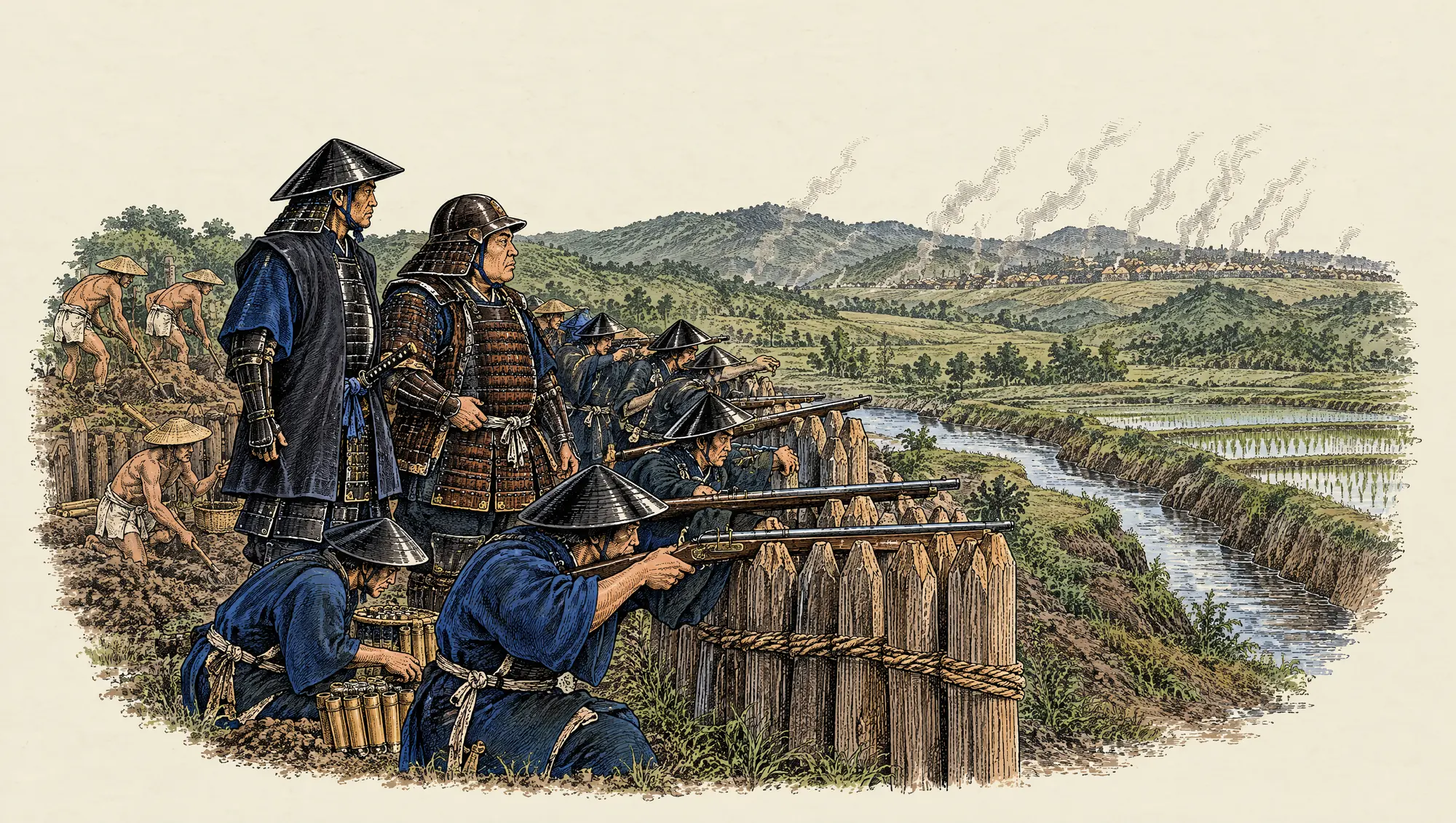
Oda Nobunaga's arquebusiers kneeling behind a timber palisade above a stream and rice fields
Nagashino, 1575

What stops a cavalry charge?

Oda Nobunaga put his arquebusiers behind a stream and a line of timber fences at Shitaragahara and let the Takeda horsemen come to him. The fences broke the charge. The guns did the rest.

Napoleon and an aide with a lantern on a ridge before dawn while gunners haul a cannon uphill above a fog-filled valley
Jena, 1806

How do you hide an army?

In the night Napoleon had his guns dragged by hand up the Landgrafenberg. By morning a French corps stood on the heights above the Prussians, and the fog kept it hidden until it came down on them.

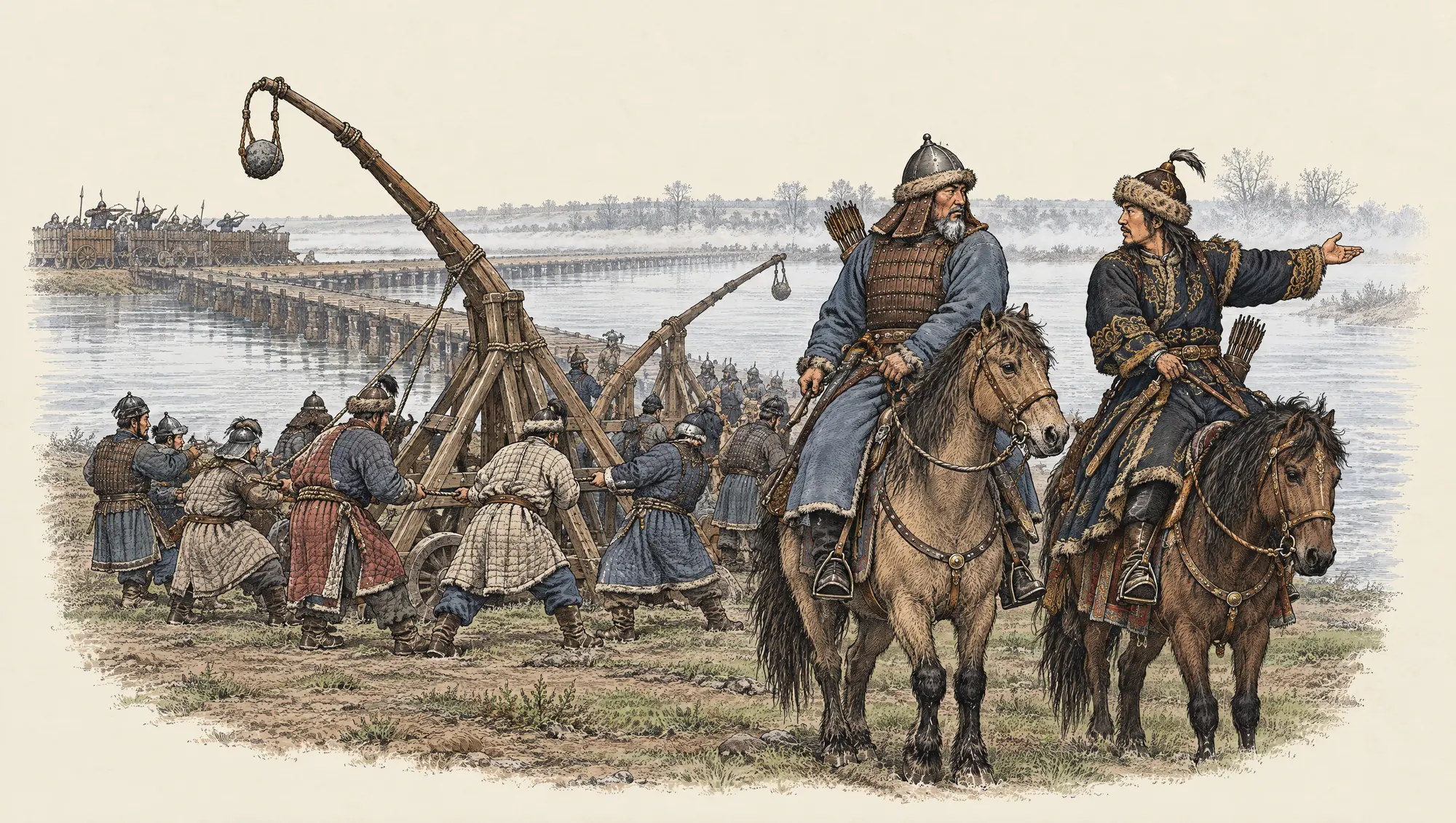
Two Mongol commanders on horseback beside stone-throwers aimed at a defended bridge over a misty river
Mohi, 1241

What is one bridge worth?

The Hungarians held the only bridge over the Sajó. At dawn the Mongols cleared it with stone-throwers, while Subutai took a second column across the river downstream and came in behind the camp.

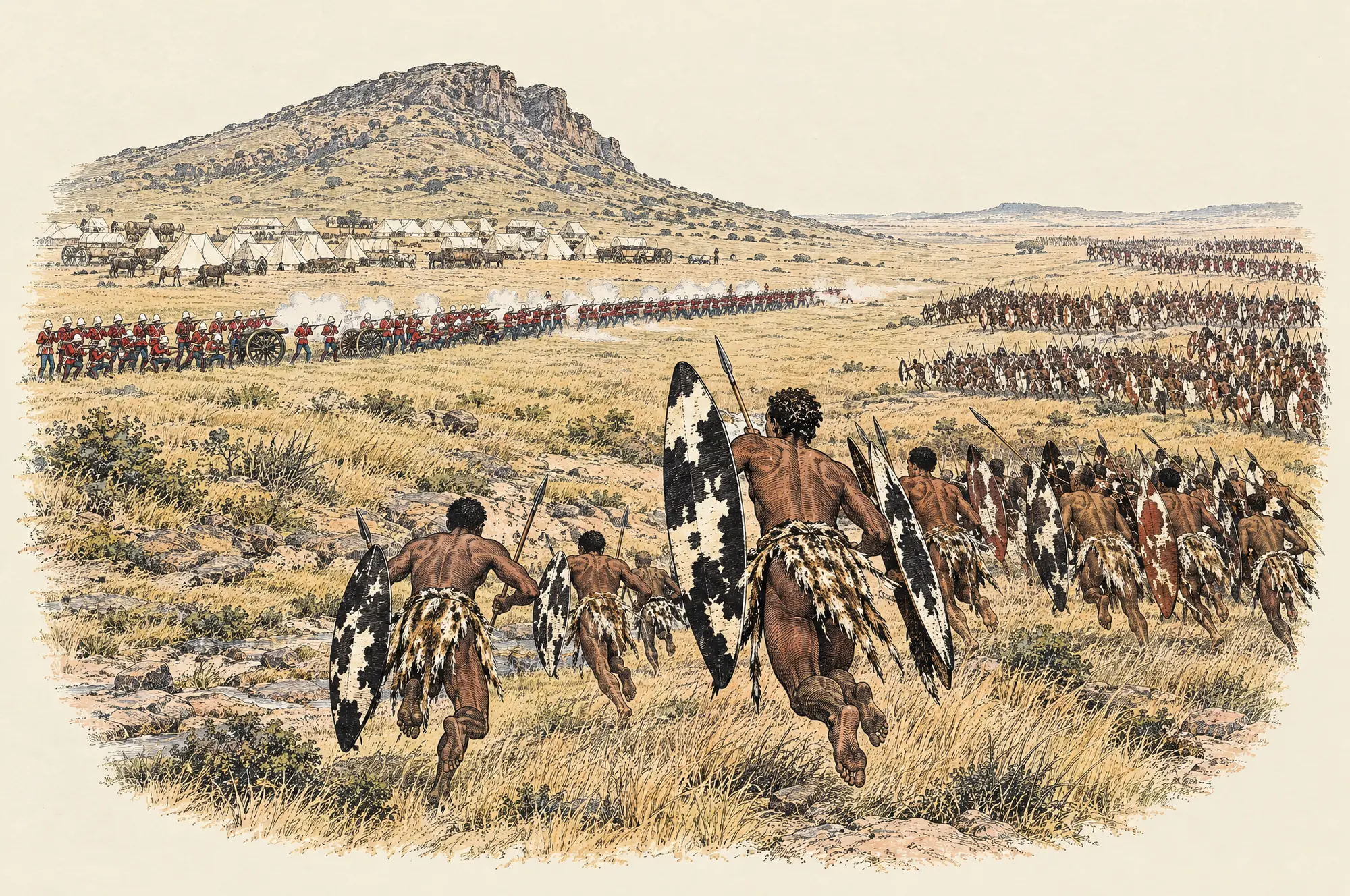
Zulu warriors running across open grassland toward a red-coated firing line below a flat-topped hill
Isandlwana, 1879

How does a spear beat a rifle?

The British camp was unfortified and its firing line was stretched thin. The Zulu army came on in the horns of the buffalo: the chest held the line in place while the two horns ran round its ends.

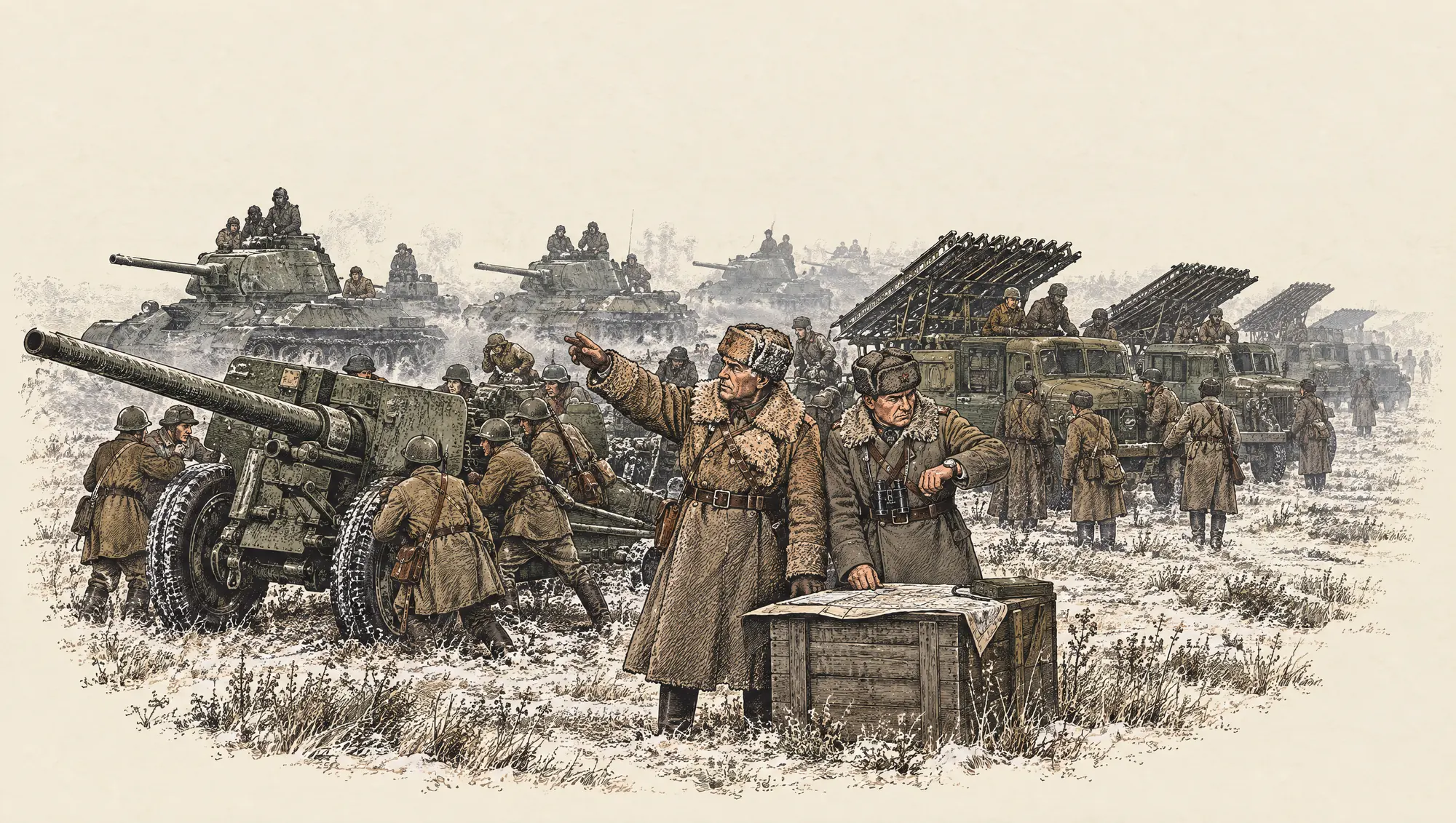
Soviet officers checking a watch beside field guns, tanks and rocket launchers in the snow
Stalingrad, 1942

Where is an army weakest?

Not in the city. On 19 November 1942 the Red Army struck in fog at the thinly held flanks out on the Don, and four days later the German Sixth Army was surrounded.

The armies

Thirty-three armies, each drawn from life.

From the legions to the present day. Every army has its portrait, eight kinds of unit, a signature order and two of its battles drawn, and any of them can be set against any other.

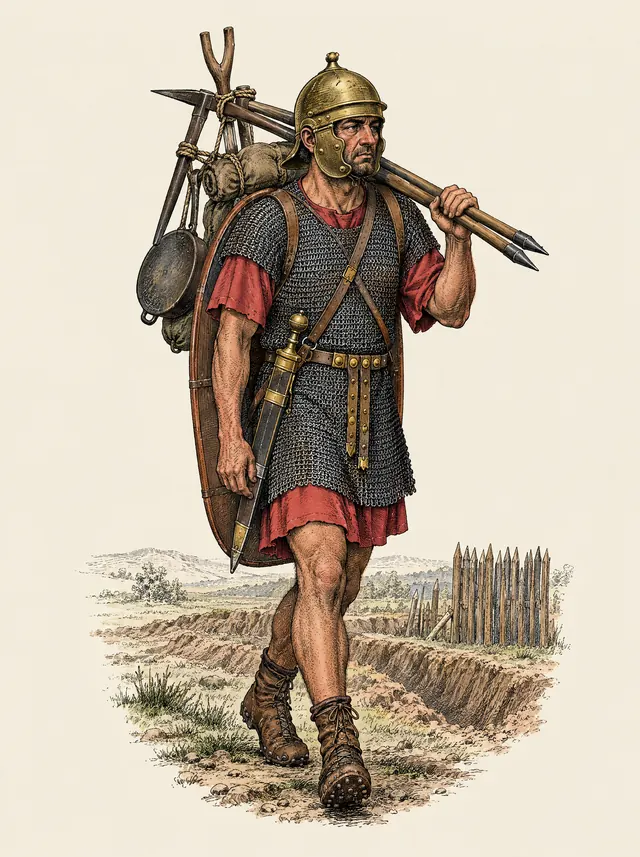
A Roman legionary on the march with his kit on a pole
Rome
A Mongol horse archer leading remounts across snow
The Mongols
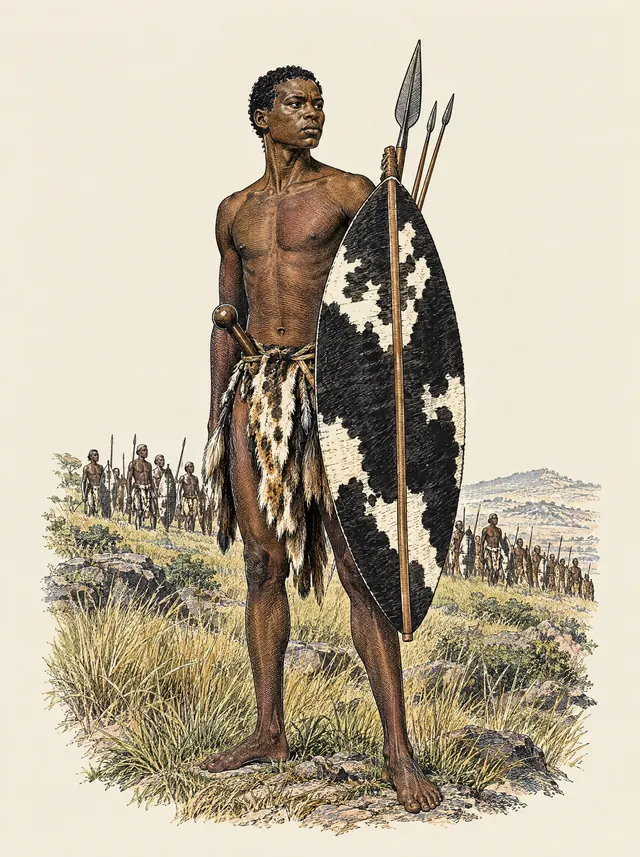
A Zulu warrior with a cowhide shield and spears
Zulu Kingdom
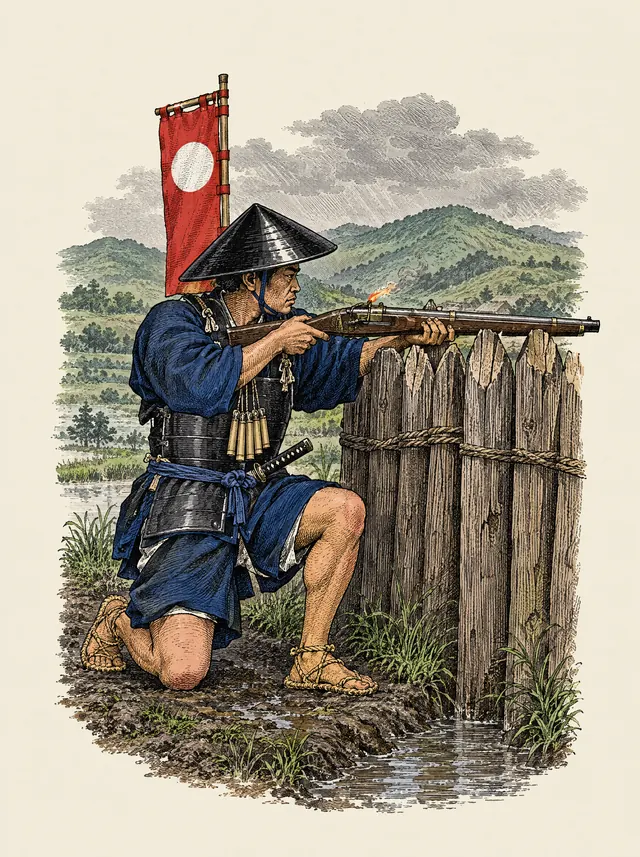
A Japanese arquebusier firing from behind a palisade
Sengoku Japan
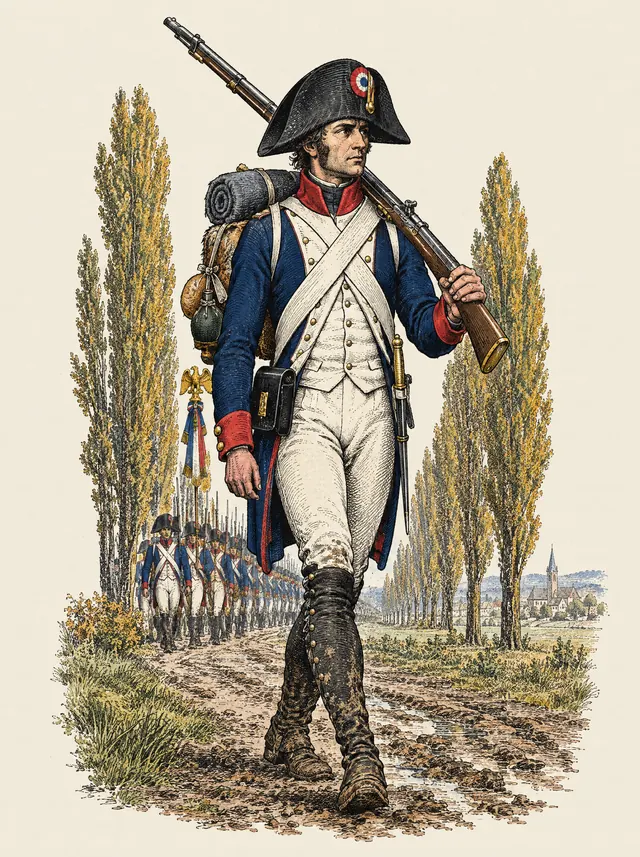
A French infantryman marching with musket and pack
Napoleonic France
A Viking with spear and round shield beside a beached longship
The Vikings
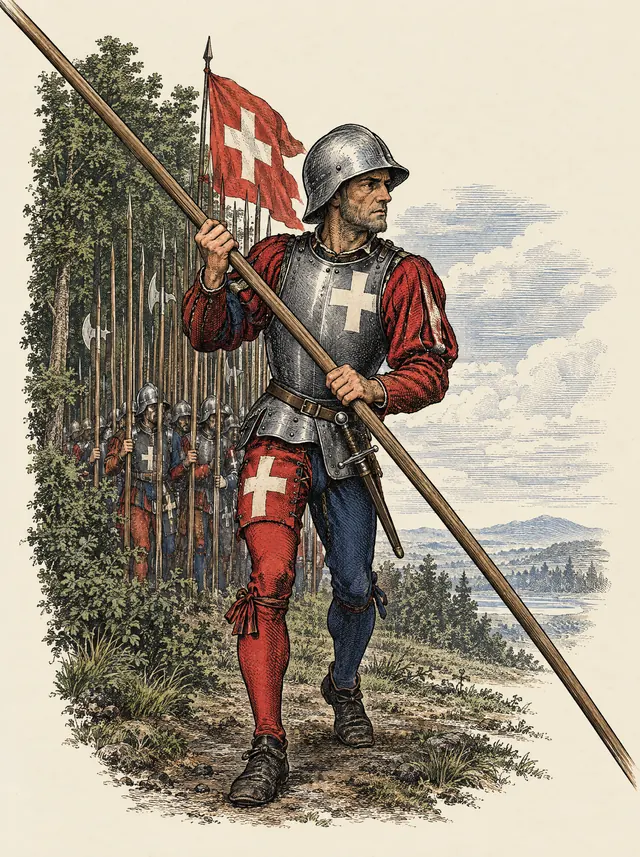
A Swiss pikeman carrying a banner past a pike block
The Swiss Confederacy
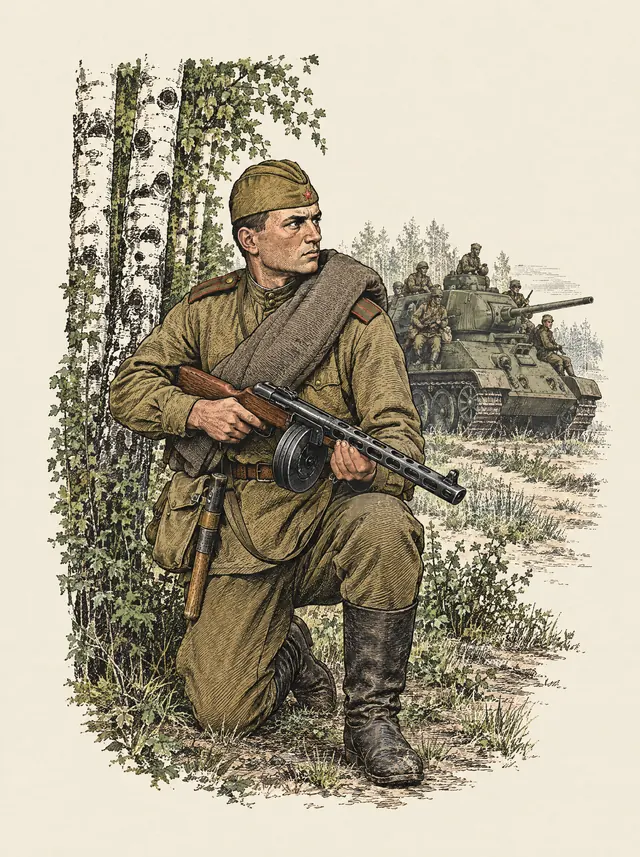
A Red Army soldier kneeling with a submachine gun in front of a tank
The Red Army
A Roman legionary drawn three times: marching with javelins, crouched behind his shield with a short sword, and throwing a javelin
Rome · Legionaries
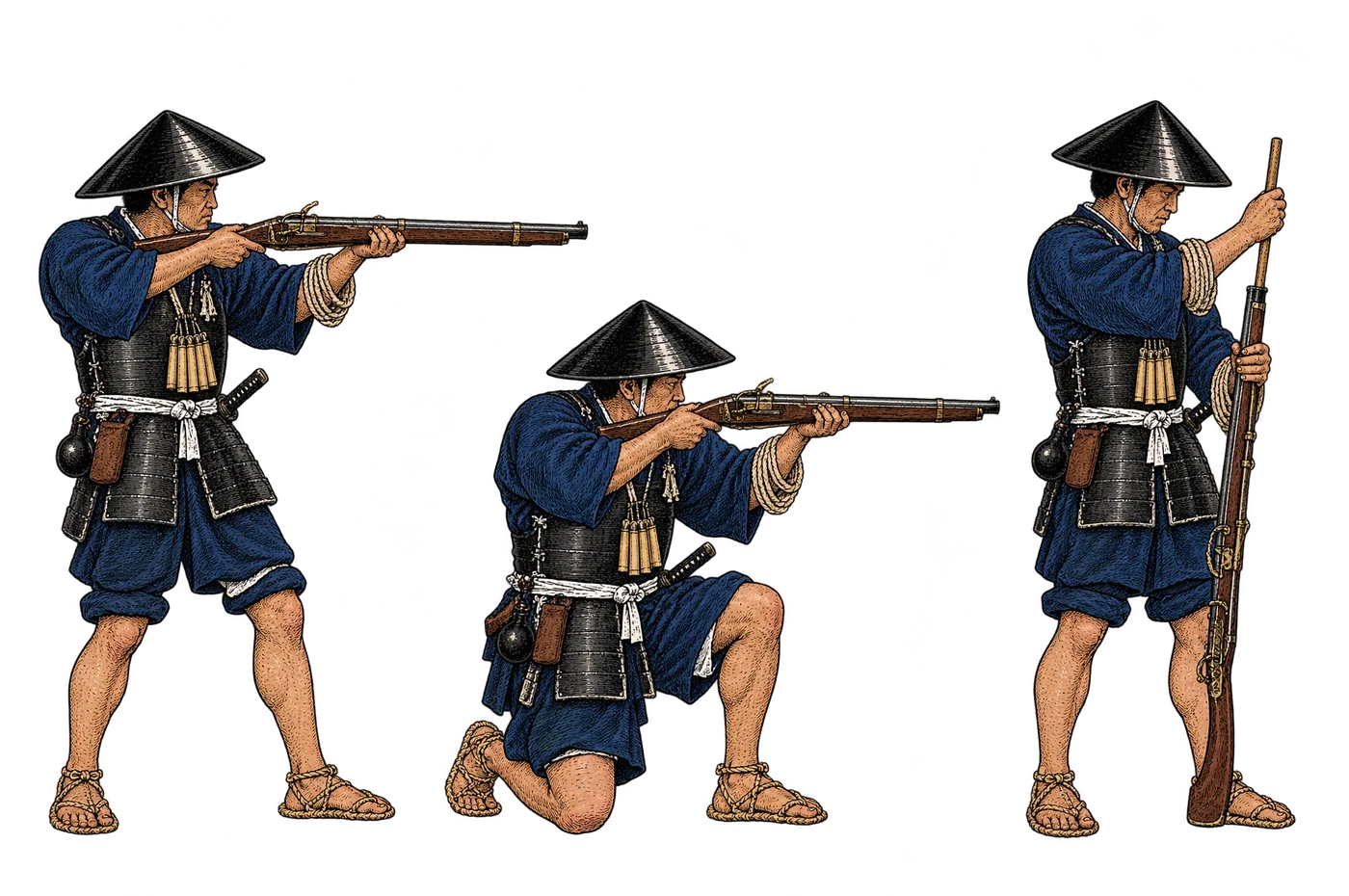
A Japanese arquebusier drawn three times: standing to fire, kneeling to fire, and reloading
Sengoku Japan · Arquebusiers

When two units meet, the fight is shown with drawn troops like these. The pictures are generated from one written style recipe, with each army’s portrait as the reference for everything drawn after it, then checked and redrawn until the kit, the hands and the shields were right.

The figurines

Teddy, in uniform.

The Rough Works dog in the kit of four of the game’s units. Each uniform is copied from that unit’s own figure in the game, then built as a toy.

Macedon · Shield-bearer
Sengoku Japan · Samurai
Napoleonic France · Old Guard
British Empire · Tommy, 1914–18
Meet all twelve in the Arcade
The sound

An original score, and a voice for every battle.

The music was written for the game: one theme, recast for each of seven ages, in pieces that chain in any order so it never comes round the same way twice. A second layer rises and falls with the fighting.

Every campaign battle opens and closes with narration, and each commander gives his orders aloud. The score is composed in code and played by a sampled orchestra; the voices are generated.

The score

  • Main themeThe theme every other cue is built from
    2:37
  • A tour of the seven agesThe same theme, from antiquity to the present day
    3:06
  • The battle risesThe second layer coming in as the fighting grows
    1:28

The voices

  • The narrator · Agincourt, 1415“October, 1415. Henry the Fifth has taken Harfleur and lost a third of his army to the siege and to dysentery, and is marching for Calais with the rest, short of food, when the French army stands across his road.”
    0:36
  • Henry V · Agincourt, 1415“They will not come to us, so we go to them. Pull up the stakes, carry them forward to long bowshot, plant them again, and shoot.”
    0:17
  • Hannibal · Cannae, 216 BC“There is one thing more astonishing, Gisgo, which you have missed. In all that great multitude there is not a single man called Gisgo.”
    0:11
  • The Red Army · Stalingrad, 1942“The guns open at seven thirty. Eighty minutes. In this fog nobody corrects the fire and nobody flies, so the tank corps go through by compass.”
    0:20
How it is built

Six rules under the history.

It started as a one-line brief: like Civilization, but just the war, with human history as the engine. The research came first and the rules came out of it.

01

The ground decides.

A staff ride is the old army habit of walking officers over a battlefield to work out why it went the way it did. So a battlefield here never names an army. It is ground, a clock, weather and where each side forms up: height, rivers, mud, cover and supply do the rest.

02

One scale for every army.

Thirty-three armies, from the legions to the present day, and any of them can fight any other. Each is rated against its own contemporaries rather than on raw technology, and one formula turns those ratings into every unit’s numbers and cost. Nobody sets a price by hand.

03

Every rule has a source.

Each army has four strengths and four weaknesses, and every one is tied to a cited fact. Rome digs in faster than anyone because Roman armies fortified a camp at every halt. The research behind the rosters runs to nearly fifty thousand words.

04

Dice you can see.

Fights are thrown with dice: up to three against two, highest against highest, ties to the defender. Ground, flank, charge, morale and weather tilt the throw, and the fight plays out as a drawn scene with the troops in it. Chance should look like chance, not a percentage.

05

Battles end by capture.

Take the enemy headquarters and hold it and the day is yours. A worn-out army fights worse, but it is never counted out by a meter; it can still win the same way. No religion and no politics either: just war, and why it went the way it did.

06

Balance is measured, not argued.

The computer plays the game against itself to find each army’s hidden handicap and each battlefield’s scale. The last full check ran 12,672 battles and put every army’s win rate between 45 and 56 percent. Change a rule and the measurement is run again.

The campaigns

Seven commanders, three battles each.

Four short lessons teach the game on real ground: Agincourt, Isandlwana, Moscow and Cannae. After that the campaigns follow one commander through three of his battles, narrated, with medals for doing it the hard way.

  1. 218–216 BCHannibal in ItalyThe Trebia, Lake Trasimene, Cannae
  2. 1223–1241Subutai in the WestThe Kalka, Legnica, Mohi
  3. 1346–1415Three Fields of FranceCrécy, Poitiers, Agincourt
  4. 1560–1575Oda Nobunaga’s WarsOkehazama, the Anegawa, Nagashino
  5. 1631–1632The Lion of the NorthBreitenfeld, the Lech, Lützen
  6. 1806The Road to BerlinSaalfeld, Jena, Auerstedt
  7. 1941–1943From Moscow to KurskMoscow, Stalingrad, Kursk
Play it here

Take the field.

The whole game runs in this page. Start with the lessons, pick an army and a battlefield, or go straight to Hannibal. It has music and narration, so mind your speakers.

Best on a laptop or desktop; it works on a phone too. Your progress is saved in this browser.

Open in its own tab
Reach Out

Need something this involved built?

Staff Ride is a side project, built with the same research, design and engineering we put into client work. If yours is a hard one, we would like to hear about it.

Start a Project